Review: The Black Cauldron (Prydain Chronicles #2)
Friday, February 19th, 2016 06:39 pm![[personal profile]](https://www.dreamwidth.org/img/silk/identity/user.png) terresdebrume
terresdebrume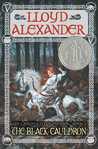 The Black Cauldron by Lloyd Alexander
My rating: 3 of 5 stars
Summary: Taran, the Assistant Pig-Keeper, and his friends are led into a mortal struggle with Arawn and his deathless warriors. Taran must wrest the black cauldron from them, for it is the cauldron that gives them their evil strength. But can he withstand the three enchantresses, who are determined to turn him and his companions into toads? Taran has not foreseen the awful price he will have to pay in his defence of Prydain…
Like its predecessor, this book follows a rather classical plot structure—in this case, the quest for a magical object (the Black Cauldron, which Arawn uses to make super zombie soldiers). It’s not exactly a novelty anymore, although at the time of publication (1965) it probably was, but it’s well handled and it works well.
What I appreciated most about this book was the overall message. See, in this volume Taran meets Adaon, a hero-slash-bard who gifts Taran with a magical brooch that has a ton of interesting properties. For example, it allows Taran to know hos to track animals, undrstand how the forest works, that kind of things. This allows Taran to do a lot of useful things, until he has to part with the booch and its magical qualities, and complete his quest without them.
The thing is, when Taran gives up his brooch—and completes his quest—it teaches him, as other heroes have told him, that succeeding on your own merit is ultimately far more satisfying than succeeding thanks to somebody else’s work or talent (which is different from teamwork). That’s a good message to give to kids, in my opinion and something I can fully get behind.
I also appreciate the evolution of Taran’s character throughout this book. He’s still sort of thoughtless and awkward but he does admit when he’s wrong and it doesn’t feel like it falls on deaf ears—although to be fair, it’s not exactly a complete renewal of his character from last book, either—which makes room for a progressive and organic growth.
Eilonwy is still forced to take a backseat in the action which is frustrating although in-line with the time of writing, I guess. She still evolved though, and feels less nasty (but still sort of haughty) than she did in book one, which I count as character development, accidental as it may be.
As for Fflewddur and Gurgi, they don’t quite change as much—although Fflewddur lies less than he did in The Book of Three, which is good for a background character—but I’ve actually grown pretty fond of them both which, in Fflewddur’s case, was a welcome surprise.
A solid 3.5 stars rating, rounded down because reading through the rest of the series made me see some flaws (Eilonwy’s feeble evolution, for example) in a different light.


